Store Equipment Guide: Hooks, Sign Clips, Pushers and Dividers
The parts that hold a display together, keep the product aligned and make the price visible matter as much as the stand itself. This guide explains which piece of store equipment is used where, from hooks to pusher systems.
9 min read
GuidesATA DİZAYN
Key takeaways
Store equipment falls into four functions: connecting, carrying, organising and informing.
Hooks attach product to perforated panels, wire baskets or channel profiles; the choice follows the panel type.
Pusher systems keep feeding product forward, removing shelf gaps and lowering refill frequency.
Shelf label holders are the most overlooked part of secondary display; if the price is not visible, the display loses half its power.
Fastener selection determines whether a stand can be taken apart, which makes it a recycling decision too.
When a display stand is discussed, the conversation is always about the body: its form, its height, its print area. Yet what really determines how a stand performs in store is usually the small parts. The divider that holds the product in place, the label holder that shows the price, the support that carries the shelf, the fastener that holds the body together — none of them appear in the photograph, and all of them decide in-store performance.
This guide groups store equipment by function and explains which piece is used where. You will find the product lists for every category on our equipment pages.
The four core functions
However many hundreds of different parts exist, they all serve one of four functions. Deciding which function you are looking for narrows the list immediately.
1Connecting: Elements that fix parts to each other or the stand to store infrastructure — screws, rivets, clips, clamps, suction cups.
2Carrying: Elements that transfer load and hold the shelf up — support systems, feet, carrier rails.
3Organising: Elements that keep product aligned and manage its flow — divider rails, pushers, roller systems.
4Informing: Elements that carry price and message — label holders, frame holders, header brackets.
The body of a stand displays the product; the equipment makes sure it still looks the same six months later.
Display hooks
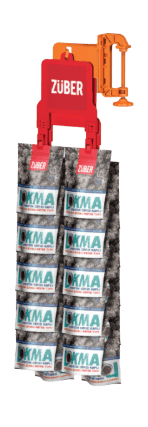
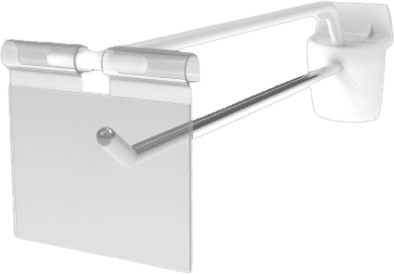
The core part of hanging display, used for blisters, pouches and euro-hole packaging. The first rule of selection is that the carrier surface decides, not the product: for the same product, a hook for a pegboard and a hook for a channel profile are different parts.
Carrier surface
Suitable hook type
Usage note
Perforated panel (pegboard)
Single / double prong hook
A double hook prevents rotation
Channel profile (slatwall)
Single / double channel hook
Selected to match the profile size
Flat bar / metal rail
Flat-bar channel hook
Used on wire shelves and metal rails
Wire baskets and shelf wire
S hook, wide S hook
Fits fast, needs no tools
Existing shelf edge
Quick-fit hook
The most practical solution in secondary display
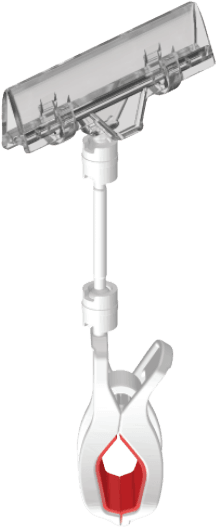
Hook types that carry a label form a separate group: they open a price and message area directly above the product. In categories exposed to theft, protected and locking hooks are used. You can review every model on our display hooks page.
Support and carrier systems
Shelf load does not sit directly on the body; carriers in between distribute it. These parts are invisible but they are what actually sets shelf capacity. Chosen wrongly, the shelf sags in the middle — the most complained-about defect in a stand.
Carrier rails: Run beneath the shelf and transfer load to the edges. On wide shelves, they are the only solution to mid-span sag.
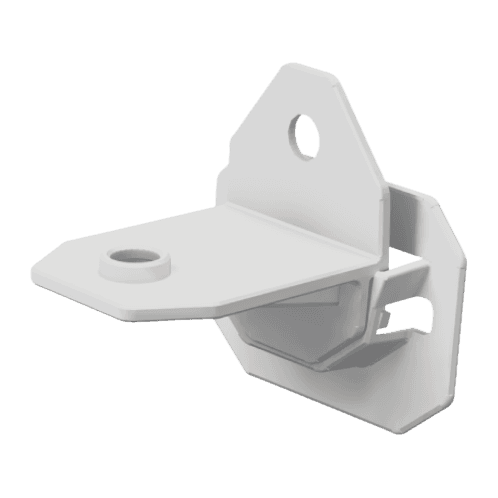
Support blocks: Fix shelf height and prevent the shelf from tipping forward.
Quick-lock supports: Fit without tools; preferred in stands assembled in store.
Slim profile supports: Used on transparent shelves where the support must stay visually recessive.
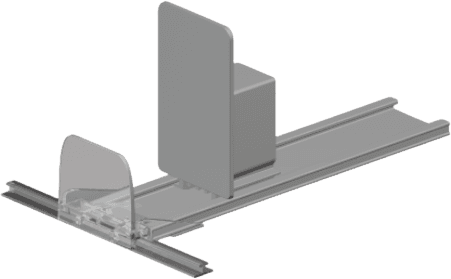
A pusher is a spring mechanism that continuously drives product forward. When the front unit is taken, the next one moves into place by itself. The job is simple but the effect is large: the shelf never looks empty.
It removes shelf gaps. As product is taken, the next unit comes forward and the shelf always reads as full.
It lowers refill frequency. Staff no longer have to face product forward; refilling is needed only when stock runs out.
It preserves category order. Products stay in lanes so variants do not mix.
It keeps facings forward. The front of the pack always faces the shopper.
Roller systems do a similar job with gravity: on an inclined base, product flows forward under its own weight. Preferred inside coolers and in high-rotation categories. You will find details on our pusher systems and roller systems pages.
Divider rails and separators
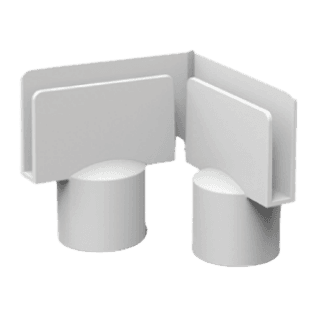
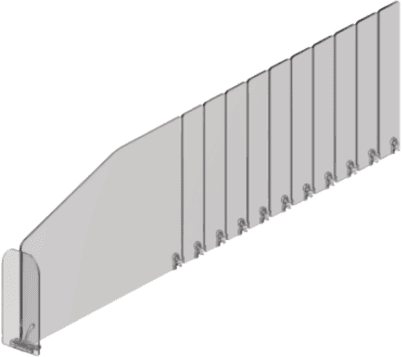
A divider is the vertical element that splits shelf width into lanes. Its function looks like tidiness, but its real contribution is sales: a shelf where products do not mix lets the shopper find what they want in three seconds.
Two dimensions matter when selecting dividers: height and depth. Height must be enough to stop packaging from tipping, but not so much that it hides the product. Depth must cross the full shelf; a divider that stops halfway does not keep rear stock in lane. Back supports, meanwhile, stop product falling behind the shelf. You will find the dimension table on our divider systems page.
Label holders and information carriers
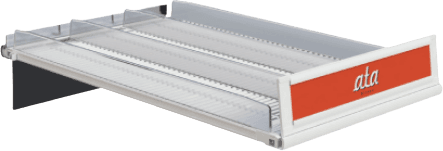
This is the most overlooked group in store equipment, and the price of overlooking it lands directly on sales. If it is not visible that a product in secondary display is on promotion, the display’s strongest card goes unplayed. We covered this in detail in our what is secondary display article.
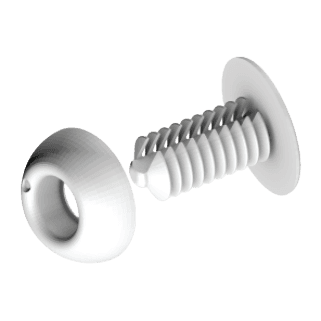
Fastener selection is as strategic as it is technical: it determines whether the stand can be taken apart, whether tools are needed in store, and whether it can enter recycling at end of life.
Screws: Removable and re-fittable. Preferred for stands that need maintenance or will be moved.
Rivets: Provide a permanent, secure joint. Used at load points that should not be opened.
Clips and snap fits: Need no tools and are the core solution for stands assembled in store.
Stoppers and dowels: Fix the distance between parts and hold shelf spacing.
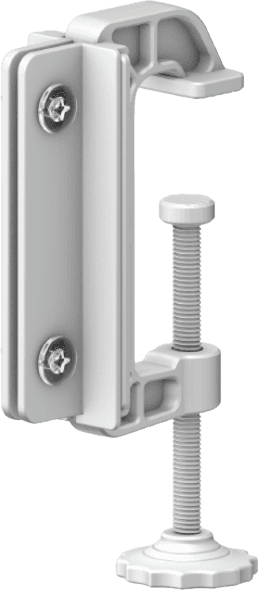
Plastic clamps: Offer a fast, flexible solution for tube and profile connections.
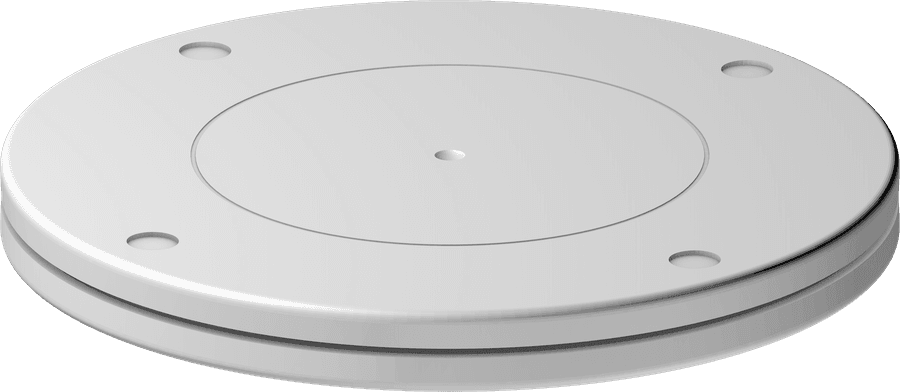
These parts establish the stand’s relationship with the floor. Foot selection follows whether the stand will be moved: lockable castor feet make the unit mobile, while fixed feet are safer against tipping. Cardboard edge trims close cut edges, improving appearance and stopping the edge from opening up. You can see the models on our feet and edge sealing page.
Suction cup mounting solutions
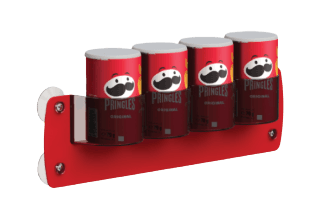
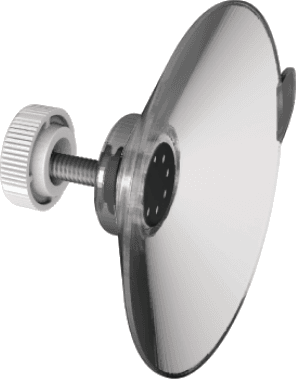
These allow mounting on glass and flat surfaces without drilling. They are the most practical solution in leased retail space, on cooler doors and in windows. Two variables matter in selection: the weight to be carried and surface temperature. On cold surfaces such as cooler doors the cup loses flexibility, so a type rated for low temperature should be chosen. Dimension and capacity information is on our suction cup accessories page.
Five rules for selecting equipment
1Identify the carrier surface first. Hooks, clips and holders are all selected against the surface; the product comes second.
2Test with real packaging. Pushers, dividers and hooks are only validated once tried with the actual product.
3Decide whether tools are acceptable. In stands assembled in store, screwed solutions are not used in practice.
4Make the label holder part of the design. A holder added afterwards looks poor and covers the product.
5Plan for spares. A display should not be spoiled by one broken hook; shipping spares of critical parts extends the stand’s life.
In summary
Store equipment is the smallest but most decisive part of a display investment. The right hook stops the product falling, the right pusher stops the shelf looking empty, the right label holder stops the price disappearing. If you want to work out which equipment your project needs, write to us.
Share
Q & A
Common questions
What should I look at when selecting a hook?
The first criterion is the carrier surface, not the product. Pegboard, channel profile, wire basket and flat bar all use different hook types. Once the surface is set, the model is chosen according to product weight, hole type and label requirement.
Can a pusher system be used with any product?
No. With very light packaging and rough surfaces the spring force may not advance the product, and with very heavy products friction rises. Testing with real packaging before selecting the system is the right approach.
Why does the shelf label holder matter so much?
If the price or promotion of a product in secondary display is not visible, the shopper postpones the decision. The label holder carries price communication — the display’s strongest card — and should be part of the design rather than a detail added later.
Is a stand that assembles without tools possible?
Yes. With clips, snap-fit joints and quick-lock supports a stand can be built without tools. This is a mandatory design constraint in projects where store staff will handle assembly.
Can we source equipment separately from a stand?
Yes. Hooks, label holders, support systems, dividers and fasteners can all be supplied independently of a stand project. Category lists and product codes are available on the equipment pages.